
Trees for the Triangle is proud to collaborate with the Town of Apex to host the fourth annual Triangle Environmental Symposium
(formerly Cary Environmental Symposium) at the Halle Cultural Arts Center. From August 27 to September 17, we invite you to join us for an
exciting lineup of presentations, performances, and discussions. Each event is designed to inspire thoughtful and principled civic debate on the
challenges facing our air, land, water, and the effects those challenges have on life here in Apex and on earth.
We'll be giving away Longleaf pine seedlings at the events!
Tickets to Events
Links to Apex's ticketing service will be posted in the descriptions of the presentations by June 2026. Any profit from this event will support Trees
for the Triangle in its mission of planting 50,000 trees by the year 2050.
Symposium Kickoff Remarks
The Honorable Jacques Gilbert
Mayor of the Town of Apex
Thursday, August 27, 2026
Halle Cultural Arts Center
Remarks delivered at 7:00 pm
Program Highlights
Rooted in Justice: Growing Healthy Communities
Panel Discussion
Moderated by Apex Mayor Pro-Tem Terry Mahaffey and Trees for the Triangle Board Member Archana Lamichhane
Thursday, August 27, 2026
Halle Cultural Arts Center
Doors Open: 6:30 pm
Program: 7:00 pm
Admission starts at $5 with additional ticket tiers to support funding for community tickets and reduce our overhead costs.
Please reserve tickets in advance.
Seating is General Admission.
Join us for Rooted in Justice, an engaging panel discussion that digs deep into the local history of environmental justice movements, and the communities that continue to speak for ecological restoration. Featuring The Reverend Robert Jemonde Taylor, eleventh rector of Saint Ambrose Episcopal Church; Alexandra Valladares, President of Comunidad de Durham and Program Coordinator for the BOOST Science Program at Duke University; Ryan Emanuel, Hydrologist and Professor at Duke University and Author of On the Swamp: Fighting for Indigenous Environmental Justice; and Sarah Brim, Community Watershed Ambassador of Partners for Environmental Justice, this conversation will explore how advocacy and action lead to building more resilient communities.
GET TICKETS
Panelists:
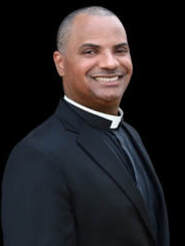
Jemonde
Taylor
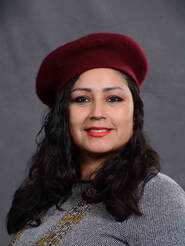
Alexandra
Valladares
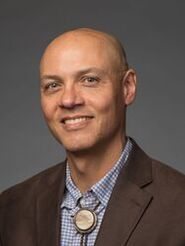
Ryan
Emanuel
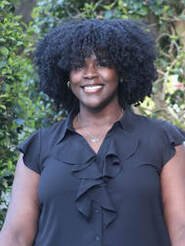
Sarah
Brim
Moderators:
Learn how these individuals have driven and continue to drive change in their communities to protect and speak up for their friends,
family, and loved ones. Moderated by Town of Apex Mayor Pro-Tem Terry Mahaffey and Trees for the Triangle Board Member Archana Lamichhane.
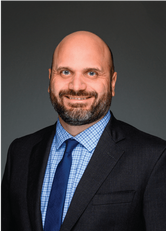
Terry
Mahaffey
Mayor
Pro-Tempore
Town of Apex
.jpg)
Archana Lamichhane
Board Member
Trees for the Triangle
Musical background and introductory piece: Alexandra Valladares & Viajeros Melodiosos
Basil Camu
From Wasteland to Wonder
Thursday, September 3, 2026
Halle Cultural Arts Center
Doors Open: 6:30 pm
Program: 7:00 pm
Admission starts at $5 with additional ticket tiers to support funding for community tickets and reduce our overhead costs.
Please reserve tickets in advance.
Seating is General Admission.
GET TICKETS
The way we currently manage the suburban and urban landscape is creating a wasteland and harming the well-being of Earth. Fortunately,
we have an alternative path: We can work with natural systems instead of working against them. By doing so, we can help heal Earth.
We also save time and money because we perform fewer tasks and use fewer products. Best of all, these are simple things that anyone can do regardless
of their knowledge or experience.
When you ask Basil what he thinks about himself, he'll tell you he is incredibly lucky. He has family he loves dearly,
friends and colleagues who inspire him, and every day he gets to care for trees, soil, and flowers. He pursues his purpose and passions as the
co-founder of Leaf & Limb and Project Pando. He is a Treecologist, ISA Board Certified Master Arborist, Duke University graduate, Wizard of Things,
and author of "From Wasteland to Wonder – Easy Ways to Help Heal Earth in the Sub/Urban Landscape."
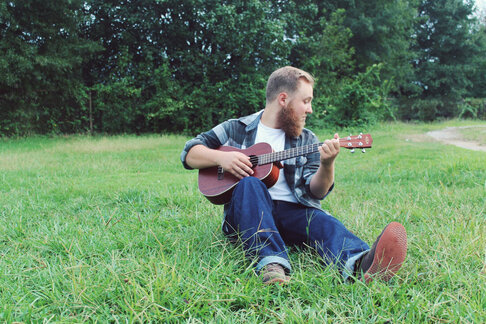
Musical background and introductory piece: Dave Devlin on Ukulele
Meg Lowman, Chumpi Washikiat, and Godi Godar:
Forests from Around the World
Thursday, September 10, 2026
Halle Cultural Arts Center
Doors Open: 6:30 pm
Program: 7:00 pm
Admission starts at $5 with additional ticket tiers to support funding for community tickets and reduce our overhead costs. Please reserve tickets in advance.
Seating is General Admission.
GET TICKETS
Dr. Meg Lowman, nicknamed Canopy Meg and called "The Real-Life Lorax" by National Geographic, has devoted over four decades to exploring the the world's
treetops. She built the first public canopy walkway in North America at Myakka State Park in Florida, which is the first public treetop trail. It is a novel
suspension bridge and tower providing researchers and visitors with eye-level views of the forest canopy and a spectacular above-the-treetops view of the
entire park. Come learn about her mission to explore, research, and conserve global forests; mentor the next generation, especially women and minorities,
in sustainability and forest stewardship; and educate diverse audiences through storytelling!
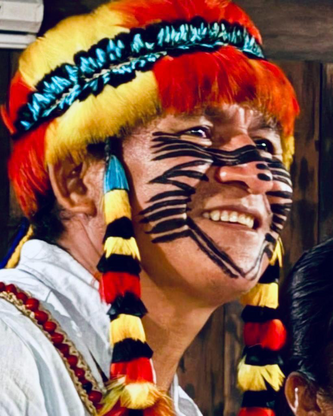
Chumpi Washikiat Ramiro Vargas is a respected local leader, tour guide, and founding team member of the pioneer,
community-based ecotourism Kapawi Ecolodge, located deep in Ecuador’s Amazon rainforest in the Achuar territory, near the Peruvian border.
In recognition of his lifelong dedication to environmental stewardship and Indigenous leadership, Chumpi Washikiat was given the incredible
opportunity to attend the United Nations Climate Change Conference (COP30) in Brazil and ChangeNow Conference in Paris.
His participation helped bring Achuar perspectives and Amazonian Indigenous voices to the global stage, a crucial step toward protecting the
rainforest and the rights of its peoples.
A proud member of the Achuar Indigenous community of Kapawi, Chumpi Washikiat has spent 30 years guiding visitors through one of the most remote
and biodiverse regions of the country. As one of the first staff members of the ecolodge, he has played a key role in shaping it into a model of
community-based ecotourism, therefore recently elected to become the General Manager of the Kapawi Ecolodge Tourist Services Association
(Asociación de Servicios Turísticos Kapawi Ecolodge-ASOSTUKE).
Fluent in Achuar, Kichwa, Spanish, and English, Chumpi Washikiat brings deep cultural and ecological knowledge to his work. He not only
introduces guests to the rich traditions and worldview of the Achuar people, but also mentors young guides along the Río Pastaza, helping pass
down intergenerational knowledge and skills.
Now turned 50, Chumpi Washikiat's commitment to his community extends beyond tourism. He is actively involved in preparing Achuar youth for
the future — teaching traditional culture and language, while also encouraging sustainable employment opportunities that support both people
and the forest.
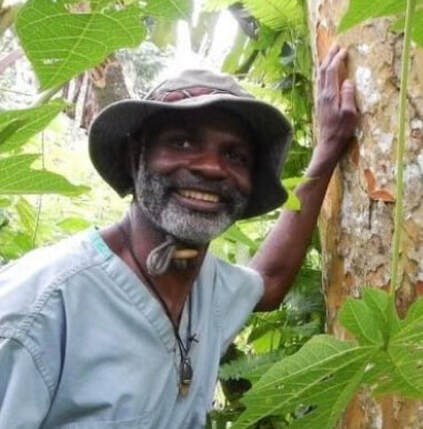
Godi Godar Moteke Molanga of the Bantu Ntomba community grew up in the village of Ikoko Bonginda, at the edge of Lake Tumba in the Democratic Republic
of Congo (DRC). As a grandson of the chief, he was next in line to lead, but a vivid boyhood vision foretold him leaving his home, traveling to an
unknown land, and one day returning to support and protect his people.
For many years, Godi and volunteers have worked tirelessly to protect land rights, wildlife, clean water, and carbon rich rainforests.
Their success has not only protected the health of people, animals, and ecosystems, but also proven the success of community-based anti-poverty
initiatives to the DRC government.
When Godi was sixteen, Habitat for Humanity volunteer, Dean DeBoer, began a three year stay in Godi’s village. There he and Godi learned each others
language and culture. Dean invited Godi to travel to the US with him. Thus began the fulfillment of Godi's childhood dream. He has lived in Durham,
NC since his arrival in 1988.
23 years later Godi’s mother, Nsaba Koko, pleaded with her son to find a way to protect the land, waters, and forests surrounding their village.
Logging companies were destroying the livelihood of his people, endangering wildlife, and polluting the air. Koko asked him, “How can we protect our
homelands?” With that question, Godi's purpose in leaving his tribe became clear.
In response to his mother’s pleas, Godi started Go Conscious Earth in 2012 (Koko died later that year). With strong ties to the local community and
the provincial government, he helped secure a temporary agreement to protect a one million acre tract of land surrounding his and neighboring villages.
As of 2018, much of that land has now been converted to Community Forest Concessions, which provides the local people with legal rights to their land
in perpetuity. From the beginning, it was clear that addressing the basic needs of the local people was an integral part of long-term forest
conservation. Sustainable development initiatives such as clean water, non-timber forest product cultivation, and clean energy have always been at
the heart of GCE’s approach.
Musical background and introductory piece: Godi Godar on xylophone
Joanne Hershfield
Gardening for the Planet
Documentary Screening
Thursday, September 17, 2026
Halle Cultural Arts Center
Doors Open: 6:30 pm
Program: 7:00 pm
Admission starts at $5 with additional ticket tiers to support funding for community tickets and reduce our overhead costs. Please reserve tickets in advance.
Seating is General Admission.
GET TICKETS
Joanne Hershfield taught in the Department of Women's and Gender Studies at UNC-Chapel for twenty years and has been producing social-issue
documentary films for thirty years. Recent films distributed nationally and internationally include Mama C: Urban Warrior in the African Bush,
the story of Charlotte O’Neal, a former member of the Kansas City Black Panther Party, a poet, musician, artist, and community activist who has
lived for over forty years as an urban warrior in the African Bush in the Tanzanian village of Imbaseni; These Are Our Children, a one-hour documentary
film reveals how the devastating effects of poverty, HIV/AIDs, and violence on Kenyan children are successfully being reduced through local grassroots
interventions; and Men Are Human, Women are Buffalo, a film about violence against women in Thailand. Benevolence, a Journey from Prison to Home
follows five women as they are released from prison and move onto Benevolence Farm in Alamance County, NC. The Gillian Film tells the story of a young
woman with developmental disabilities who decides to move from her parents' home and live on her own.
Joanne's newest film, Gardening for the Planet, is a documentary about how native-plant gardening can make a meaningful and significant difference in
combating the devastating effects of climate change.